
A customer calls the number they found online and reaches a disconnected line. Another drives to an address you left two years ago. Neither one tells you what happened. They simply pick a competitor. That is the quiet cost of outdated business citations, and it is more common than most owners realize.
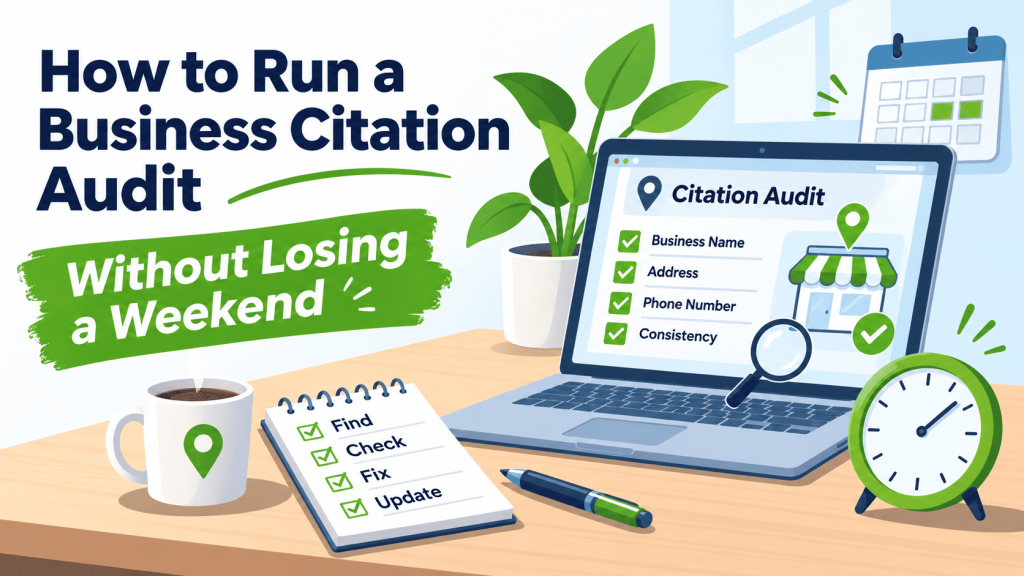
A citation audit is the process of finding every place your business name, address, and phone number (NAP) appear online and checking that the details match. It sounds tedious, but with a simple system it becomes a manageable afternoon project.
Start With a Single Source of Truth
Before you look at a single listing, write down the exact version of your business information you want everywhere. Decide on details like “Suite 200” versus “#200,” whether you include “LLC,” and which phone number is your main line. Small differences may seem harmless, but consistent formatting makes it easier for customers and search platforms to recognize that every listing describes the same company.
Keep this record in a shared document so anyone who updates a profile uses the same wording.
Find Where Your Business Already Appears
Search your business name in quotes, then search your phone number and your street address separately. Phone number searches often turn up old listings that use a former business name. Check your Google Business Profile, Apple Business Connect, Bing Places, Yelp, your local chamber of commerce, industry associations, and the online business directories where you have submitted listings over the years.
Record each result in a spreadsheet with columns for the site, the URL, the NAP shown, and whether it matches your source of truth.
Fix Errors in Order of Impact
Not every listing deserves equal attention. Start with the platforms customers actually use, then work through industry and local directories. Claim listings where possible so you can edit them directly, and keep login details in a password manager so the next update is easier.
Marketing agencies and consultants often handle this work for clients, and you can browse providers in the Advertising and Marketing category on Pure Business Listings if you would rather hand off the cleanup. Either way, note the date of every change so you can confirm later that updates actually went live.
One common mistake is creating a brand-new listing instead of claiming an outdated one. That leaves two conflicting records online. Search carefully before you add anything new.
Conclusion
A citation audit is not a one-time chore. Repeat it whenever you move, change phone systems, or rebrand, and give it a quick review once or twice a year. If you are adding new listings during the process, a general directory such as Pure Business Listings can be one more accurate reference point for customers checking your details. Consistency will not guarantee rankings, but it removes a needless reason for customers to doubt you.
Frequently Asked Questions
How often should a small business audit its citations?
Once or twice a year works for most businesses. You should also run an audit right after any change to your name, address, phone number, or website. Those moments are when outdated information is most likely to spread, so checking promptly keeps small errors from multiplying across dozens of sites.
What counts as a business citation?
A citation is any online mention of your business name along with your address, phone number, or both. It can appear in a directory, a review site, a social profile, a news story, or a chamber of commerce page. A link is not required for a mention to count as a citation.
Do I need paid software to audit citations?
No. Paid tools can speed things up for multi-location businesses, but a single-location company can do a thorough audit with search engines, a spreadsheet, and some patience. Software mainly saves time by scanning many sites at once and tracking changes.
What if I cannot get an old listing removed?
Try to claim it and correct the details instead of deleting it. If the site will not respond, document your attempts and move on to listings that matter more. A single stubborn listing on a little-used site is rarely worth hours of effort.